Data Lakehouse Architecture: Why CTOs Are Rethinking the Data Warehouse vs. Data Lake Debate
The architecture decision that dominated data strategy discussions for the past decade—data warehouse or data lake—has become the wrong question. Organizations that built data lakes to complement their warehouses now operate two expensive, complex platforms that require constant synchronization. Teams waste 40-50% of their engineering capacity moving data between systems, reconciling inconsistencies, and managing access controls across fragmented infrastructure. Meanwhile, data scientists cannot access warehouse data without extraction pipelines, and analysts struggle with the unstructured chaos of data lakes.
Data lakehouse architecture emerged not as a compromise between these approaches but as a fundamental rethinking of how enterprise data platforms should work. By combining the structured governance and query performance of warehouses with the flexibility and cost efficiency of lakes, lakehouses address the core limitations that forced organizations into dual-platform strategies. The question for technology leaders is no longer whether to choose warehouses or lakes, but whether lakehouse architecture matches their specific requirements and what implementation actually entails.
The Architectural Problem That Created Dual-Platform Complexity
Understanding why lakehouses matter requires examining why organizations built separate warehouses and lakes in the first place. Data warehouses excelled at structured analytics—fast SQL queries, reliable transactions, strong schema enforcement. But they struggled with three critical limitations: prohibitive costs for storing semi-structured or unstructured data, inflexibility when schemas needed to evolve, and inability to support machine learning workloads requiring access to raw, granular data.
Data lakes solved these problems by storing everything in cheap object storage with schema-on-read flexibility. Data scientists could access raw data without transformation bottlenecks. Storage costs dropped by 70-80% compared to warehouse pricing. But lakes introduced different challenges: absence of transactional guarantees meant data quality issues proliferated, query performance for structured analytics was orders of magnitude slower than warehouses, and governance became nearly impossible as lakes grew into unmanaged data swamps.
The dual-platform response seemed logical: use warehouses for production analytics and lakes for data science. In practice, this created new problems. A specialty retailer with 200 stores discovered their customer analytics team and marketing data scientists were maintaining different versions of customer purchase history—one in Snowflake, another in S3. Reconciling these versions consumed two full-time engineers. When discrepancies appeared in customer lifetime value calculations, leadership lost confidence in both systems. The technical debt from synchronization pipelines, duplicate storage costs, and fragmented governance frameworks was mounting faster than either platform delivered value.
How Lakehouse Architecture Unifies Competing Requirements
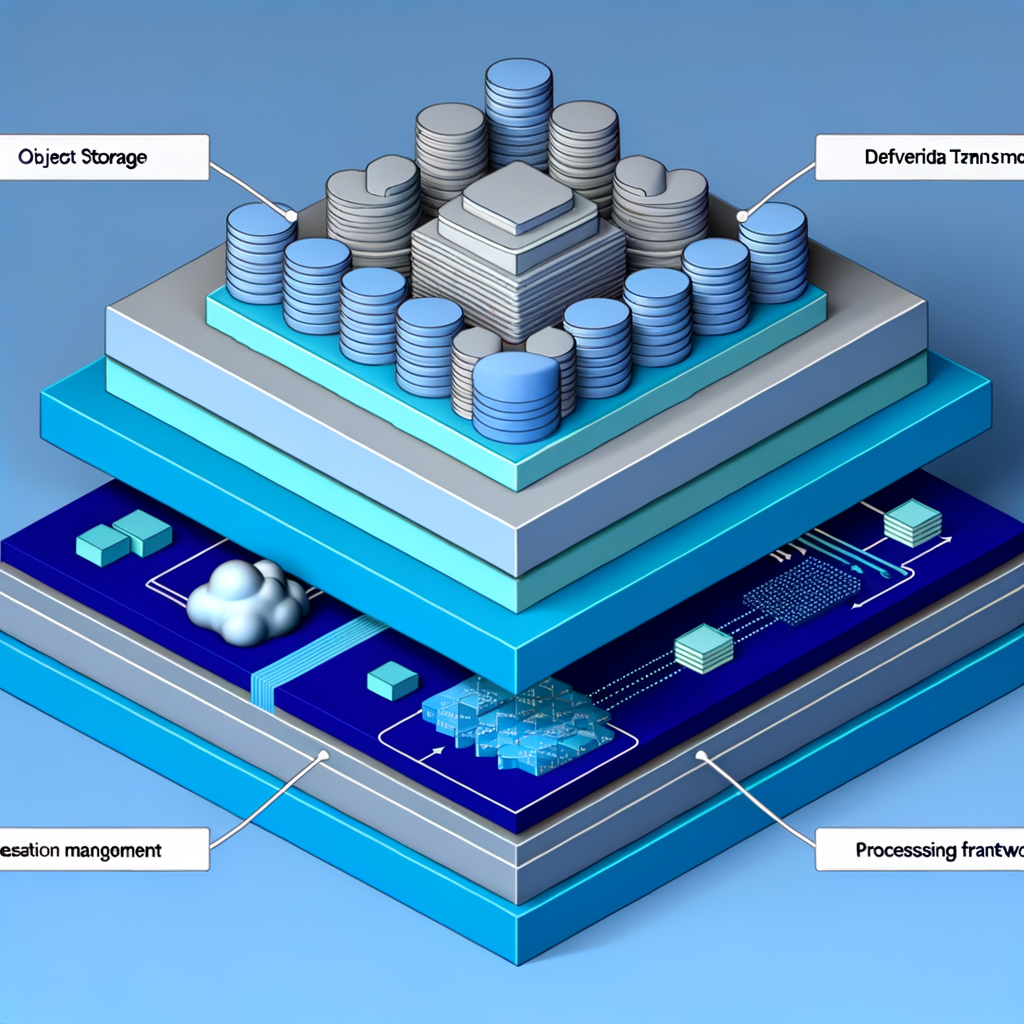
Lakehouse architecture implements warehouse capabilities directly on data lake storage through three technical innovations that fundamentally change what object storage can support. These are not incremental improvements but architectural shifts that make previously impossible combinations viable.
Transaction Layers That Enable ACID Guarantees on Object Storage
Technologies like Delta Lake, Apache Iceberg, and Apache Hudi add transactional metadata layers on top of object storage. These layers track which files constitute the current state of each table, manage concurrent reads and writes, enable time travel to previous versions, and provide atomic commits across multiple files. The result: object storage that was previously only eventually consistent now supports the same transactional guarantees as traditional databases.
A financial services company processing 400 million transactions daily implemented Delta Lake on their AWS infrastructure. Previously, their reconciliation process required nightly batch jobs that locked tables for hours. With transaction support, they moved to continuous reconciliation with concurrent read access. Data analysts could query current state while engineers loaded new transactions. The delta between transaction occurrence and analytical availability dropped from 18-24 hours to under 15 minutes, enabling same-day fraud pattern detection that was previously impossible.
Optimized File Formats and Indexing Strategies
Lakehouses use columnar file formats (Parquet, ORC) with aggressive compression and encoding schemes optimized for analytical queries. Combined with metadata-based pruning that eliminates entire files from query scans, performance approaches warehouse levels while maintaining lake storage costs. Column-level statistics enable query engines to skip irrelevant data at file granularity rather than scanning everything.
Performance gaps remain for specific workloads—highly concurrent small queries still favor warehouses—but the gap has narrowed dramatically. Organizations report query performance within 2-3x of specialized warehouses for most analytical workloads, while storage costs remain 60-70% lower. For many use cases, this tradeoff strongly favors lakehouse economics.
Unified Governance and Schema Evolution
Lakehouse platforms implement centralized metadata management, schema enforcement with evolution support, fine-grained access controls, and data lineage tracking across all datasets. This addresses the governance vacuum that plagued data lakes while maintaining flexibility that rigid warehouse schemas could not support.
Schema evolution becomes manageable rather than disruptive. When business requirements change and new fields must be added, lakehouses support backward-compatible schema updates without rewriting historical data. A healthcare provider adding new clinical data fields to patient records could evolve their schema incrementally rather than facing the months-long migration projects that warehouse schema changes typically required.
The Real Implementation Costs and Timeline Expectations
Technology leaders evaluating lakehouse architecture need realistic expectations about implementation costs, timelines, and organizational readiness requirements. Vendor marketing often suggests simple migrations, but real implementations involve substantial engineering work and organizational change.
Migration timelines vary dramatically based on current state. Organizations with existing data lakes can often implement lakehouse capabilities in 4-6 months by adopting transaction layers and migrating critical datasets incrementally. Those starting from scratch or migrating from warehouses face 9-15 month implementations involving infrastructure setup, data ingestion pipeline development, query optimization and performance tuning, access control and governance implementation, and team training on new tools and patterns.
Budget expectations should account for cloud infrastructure (compute and storage—typically 30-40% lower than equivalent warehouse costs at steady state), engineering resources (3-5 data engineers for 6-12 months depending on scale), tooling and platform costs (query engines, catalog systems, orchestration), and migration costs (parallel running of old and new systems during transition). Total cost of ownership often favors lakehouses after 18-24 months, but upfront investment is substantial.
A mid-market SaaS company with 50TB of analytical data budgeted $400K for their lakehouse implementation: $180K in engineering resources, $120K in cloud infrastructure during migration (they ran both systems in parallel for five months), $60K in new tooling, and $40K for training and consulting. Ongoing costs stabilized at roughly 60% of their previous Snowflake spend, but the payback period was 14 months. Organizations expecting immediate cost reduction will be disappointed.
When Lakehouse Architecture Makes Strategic Sense
Lakehouse architecture is not universally appropriate. Certain organizational contexts and requirements favor this approach, while others are better served by traditional warehouses, pure data lakes, or hybrid approaches.
Strong lakehouse candidates share several characteristics: diverse data types requiring both structured analytics and unstructured data science workloads, significant data volumes where warehouse storage costs become prohibitive (generally 20TB+), need for real-time or near-real-time analytics rather than batch processing, machine learning initiatives requiring access to granular, raw data, frequent schema evolution driven by changing business requirements, and engineering teams comfortable with modern data tools and open-source technologies.
A manufacturing company with IoT sensors generating 200GB daily of time-series data exemplifies the ideal lakehouse use case. They needed real-time anomaly detection (data science workload), historical trend analysis (structured analytics), and the ability to incorporate new sensor types without major system overhauls (schema evolution). Warehouse costs for storing granular sensor data would have been prohibitive. Their lakehouse implementation on Databricks reduced infrastructure costs by 55% compared to their original Redshift warehouse while enabling machine learning workloads that were previously impossible.
Conversely, organizations may find warehouses more appropriate when data volumes remain modest (under 10-15TB), workloads consist primarily of structured SQL analytics without significant data science requirements, teams lack deep data engineering expertise and prefer managed simplicity, regulatory requirements demand vendor-certified compliance frameworks, or extreme query performance for highly concurrent workloads is non-negotiable.
A regional bank with 8TB of structured financial data, hundreds of concurrent analysts, and strict regulatory requirements chose to remain on Snowflake despite lakehouse cost advantages. Their compliance framework was certified for Snowflake, replication across regions was automated, and their analyst teams were productive with SQL. The complexity and risk of lakehouse migration did not justify the cost savings given their modest data volumes and conservative regulatory environment.
Platform and Technology Selection Considerations
Implementing lakehouse architecture requires decisions about transaction formats, query engines, catalog systems, and cloud platforms. These choices have long-term implications for flexibility, cost, and vendor dependency.
Three transaction layer formats dominate: Delta Lake (Databricks-originated, now open source), Apache Iceberg (Netflix-originated, increasingly vendor-neutral), and Apache Hudi (Uber-originated, optimized for upserts). Delta Lake has the most mature ecosystem and deepest Databricks integration. Iceberg has the strongest multi-engine support and genuine vendor neutrality. Hudi excels for CDC (change data capture) patterns with frequent updates.
Technology leaders should evaluate based on vendor strategy (Databricks commitment vs. vendor-neutral approach), tooling ecosystem (which query engines, catalogs, and tools support each format), performance characteristics for your specific workloads (benchmarks for your query patterns), and team expertise and community support.
Many organizations are standardizing on Iceberg for its vendor neutrality, even when using Databricks or Snowflake. This preserves optionality and prevents lock-in, though it may sacrifice some performance optimization that vendor-specific formats offer. The calculus depends on how much you value flexibility versus last-mile performance optimization.
The Organizational Capabilities Lakehouse Success Requires
Technical architecture alone does not determine lakehouse success. Organizations need specific capabilities and cultural attributes that traditional warehouses could often compensate for through managed simplicity.
Critical organizational capabilities include data engineering expertise comfortable with distributed systems, DataOps practices for managing data quality and pipeline reliability, willingness to invest in platform development rather than purely managed services, data governance frameworks that balance access with control, and cross-functional collaboration between data scientists, analysts, and engineers.
The expertise gap is often underestimated. Data warehouses abstracted away distributed systems complexity, allowing SQL-focused teams to be productive. Lakehouses require engineers who understand partitioning strategies, file compaction, statistics collection, and performance optimization at a lower level. Organizations should honestly assess whether they have this expertise internally, can attract it through hiring, or need to build it through training and consulting partnerships.
A retail analytics company attempted lakehouse implementation with their existing warehouse-focused team. After four months of poor performance and reliability issues, they brought in consulting support. The core problem was not the technology but the team’s mental model—they were trying to use the lakehouse like a warehouse, creating small partitions, running frequent compaction, and implementing patterns that negated cost advantages. With guidance on appropriate design patterns for lakehouse architecture, the implementation succeeded, but the learning curve was steeper than leadership anticipated.
Strategic Implications for Data Platform Evolution
The emergence of viable lakehouse architecture changes how organizations should think about data platform strategy over the next three to five years. The warehouse-or-lake binary that dominated planning is being replaced by more nuanced considerations about workload requirements, cost optimization, and flexibility.
For organizations operating dual warehouse-lake platforms, incremental lakehouse adoption offers a path to consolidation. Rather than big-bang migrations, move specific workloads to lakehouse architecture based on fit. Data science workloads requiring warehouse data migrate first, capturing quick wins. High-volume, lower-concurrency analytics workloads follow. Business-critical, high-concurrency dashboards may remain on warehouses indefinitely if performance requirements justify the cost premium.
This hybrid approach acknowledges that lakehouse architecture does not make warehouses obsolete. It expands the range of workloads that can run cost-effectively on lake storage while maintaining warehouses for specific use cases where they excel. The strategic goal is not purity but optimal workload placement based on actual requirements and tradeoffs.
Organizations building new data platforms should seriously evaluate lakehouse-first strategies. Starting with lakehouse architecture avoids the dual-platform complexity that plagues data lake veterans. Greenfield implementations skip years of technical debt and synchronization overhead. However, this assumes sufficient engineering capability to implement lakehouses successfully without the training wheels that managed warehouses provide.
Making the Decision With Eyes Wide Open
Data lakehouse architecture represents genuine innovation in enterprise data platforms, not just rebranded marketing. The technical capabilities that enable warehouse performance on lake storage are real, proven in production at scale across diverse industries. Cost advantages are substantial for appropriate workloads—50-70% reductions in total platform costs are achievable.
But lakehouse adoption requires honest assessment of organizational readiness, realistic expectations about implementation timelines and costs, clear understanding of which workloads benefit most, and willingness to invest in engineering capabilities that managed warehouses previously abstracted away. Technology leaders who approach lakehouse decisions with this clarity will make sound choices for their specific contexts. Those seduced by cost savings alone without considering implementation reality will likely face difficult migrations and disappointed stakeholders.
The warehouse-versus-lake debate has evolved into a more sophisticated conversation about workload requirements, cost optimization, organizational capabilities, and strategic flexibility. Lakehouse architecture expands the solution space, but it does not eliminate the need for careful analysis and context-specific decision-making. Organizations that invest in understanding their actual requirements rather than chasing architectural trends will build data platforms that serve their needs for years to come, whether those platforms are lakehouses, warehouses, or thoughtfully designed hybrids that optimize for specific organizational realities.